A "Must-See" Video of Dr. Bernard Bihari, LDN Pioneer and Champion
As many of you know, Dr. Bernard Bihari was the genius who discovered that a very low dose of naltrexone, a drug that had been approved at a higher dose by the FDA for another purpose entirely, could ... ...more
Honest Medicine
October 15, 2025•2 min read
My Husband Outlived His Brain Tumor Prognosis by 12 Years: How His Experience Could Help John McCain and Others
In September of 1990, my then-40-year-old husband Tim was diagnosed with a cancerous brain tumor the size of an orange. His doctors “gave him” 18 months to 3 years to live. Tim and I were struck by p... ...more
Honest Medicine
September 30, 2025•6 min read
Introducing a Wonderful Resource Person: Nutritionist Jeanne Wallace, PhD
During the time when my husband Tim was ill (as I described in my first posting on this website, I began using the internet to find treatments for Tim that our doctors hadn’t told us about. Of course,... ...more
Honest Medicine
September 30, 2025•2 min read
Honest Medicine Becomes a Truly International Site!
Honest Medicine Becomes a Truly International Site! ...more
Honest Medicine
September 30, 2025•1 min read
Financial Ties Between Big Pharma and the Medical Establishment: 37 Selected Articles Published Between 2005 and 2008
As I point out in “Is It Possible Some Doctors Still Don’t “Get” the Extent of Big Pharma’s Connection to ‘Standard of Care’ Research?”, I believe that somehow (although I am not sure exactly how) man... ...more
Honest Medicine
September 30, 2025•24 min read
Is It Possible Some Doctors Still Don’t “Get” the Extent of Big Pharma’s Financial Ties to “Standard of Care” Research?
In May 18, 2000, Dr. Marcia Angell, former editor-in-chief of the New England Journal of Medicine, wrote an editorial, “Is Academic Medicine for Sale?”, which began: ...more
Honest Medicine
September 30, 2025•8 min read
Dr. John Abramson's Overdosed America: The Broken Promise of American Medicine (OR, How Medical Research Lost Its Credibility)
I have written many times before about the ways that Big Pharma cheats with medical research, and how so much of what appears in the press and on television, as well as much of what our doctors tell u... ...more
Honest Medicine
September 30, 2025•4 min read
More on Crestor and AstraZeneca – With Thanks to Dr. Jeffrey Dach
I recently received a very thought-provoking comment from Jeffrey Dach, MD, an extremely conscientious and informative integrative physician and blogger, who works hard to get the truth out about phar... ...more
Honest Medicine
September 30, 2025•5 min read
Honest Medicine's Interview with Digestion Expert and Author, Nutritionist Elizabeth Lipski, PhD
In this very informative interview, Julia Schopick interviews well-known nutritionist and author, Dr. Elizabeth Lipski, about how eating unhealthy foods has caused so many of our society's health prob... ...more
Honest Medicine
September 30, 2025•3 min read
9 Important Articles That Expose Some of Big Pharma's Highly Questionable Practices
9 Important Articles That Expose Some of Big Pharma's Highly Questionable Practices ...more
Honest Medicine
September 30, 2025•4 min read
Today, March 13, 2019, is a bittersweet day for me. If my husband Tim Fisher were alive, he would have turned 70 years old today. This would have meant a lot to him, since the males in his family didn’t survive into their sixties.
Tim died at the age of 56, fifteen years after being diagnosed with a cancerous brain tumor. As most of you who know our story know, Tim actually didn’t die as a result of the tumor itself. He died because of complications from the treatments he endured.
My website, HonestMedicine.com, and my two books, “Honest Medicine” and “The Power of Honest Medicine,” are all dedicated to Tim. He is the man who turned me into a patient advocate dedicated to helping others.
On Tim’s 70th birthday, I want to share my tribute to him, written in 2007, on the 2nd anniversary of his death. I think it tells, better than almost anything else I have written, why this man was the love of my life—why he was such an inspiration to me, and why he will always remain my inspiration.
Here it is: https://www.honestmedicine.com/2007/11/timothy-mark-fi.html
I wish I could say, “Happy Birthday, Tim!” today. But this will have to do. Thanks for reading.
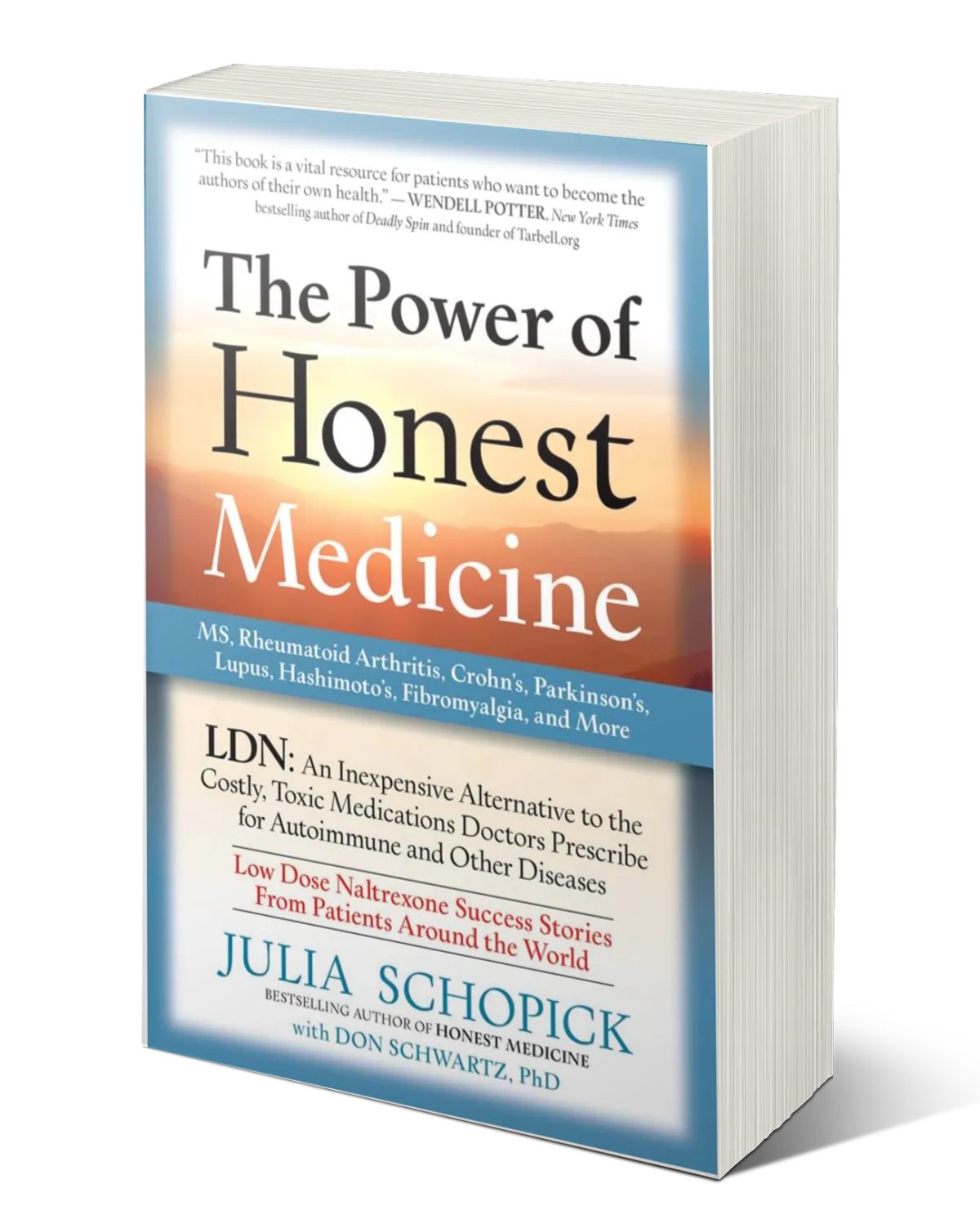
Available in paperback and Kindle eBook editions from Amazon.com.
The book, written with Don Schwartz, introduces readers to Low Dose Naltrexone, or LDN, an effective, inexpensive alternative to the costly, toxic treatments doctors routinely prescribe for autoimmune and other diseases.
The Power of Honest Medicine contains contributions from eighteen people from around the world—from the US, the UK, and Europe, all of whom are eager to spread the word about this innovative treatment that has helped them, and has become a “people’s movement.”
Learn more about The Power of Honest Medicine, and read the book's Table of Contents.
FREE EXCERPT: Read a free excerpt from The Power of Honest Medicine now.
In September of 1990, my then-40-year-old husband Tim was diagnosed with a cancerous brain tumor the size of an orange. His doctors “gave him” 18 months to 3 years to live.
Tim and I were struck by paralyzing fear. We followed doctors’ orders to a tee. Tim underwent the standard-of-care treatment: surgery, chemo and radiation. Nothing more.
For a few years he did well. But soon he began to experience every side effect and complication he could possibly endure as a result of the treatments. Most upsetting were the radiation-caused stroke and hydrocephalus (water on the brain). These complications necessitated many trips to the hospital and several surgeries.
I finally realized that if I was going to have my husband around for more than the predicted maximum three years, I would have to start finding treatments that might help him. It was obvious that the standard of care alone would not keep him alive and healthy.
So I went online and started talking on the phone. I found a nutritional consultant who I believe performed miracles, as well as some other cutting-edge treatments. Tim lived for 15 years post-diagnosis, twelve years more than his doctors had “given” him.
But we had to use treatments beyond the standard of care to achieve our success.
What does our experience have to do with John McCain?
Senator McCain’s brain tumor is a glioblastoma (GBM), one grade higher than my husband’s. According to the American Brain Tumor Association, the median life expectancy for GBM patients who use the standard of care alone—chemo and radiation—is 14.6 months. A very poor prognosis. These same treatments, with slight changes, have been the standard of care for over thirty years. Most GBM patients I know personally who have used the standard-of-care treatments alone have not lived even that long after their diagnoses. Most have survived closer to six months.
But there are quite a few long-term survivors of glioblastomas. Some have lived more than twenty years. But in every case but one that I personally know of, these long-term survivors used other treatments: some in addition to the standard of care; others without it.
Glioblastoma patients must start right away—on Day #1, if possible—to research other options. Because GBMs move so quickly, and return so ferociously, there simply is not time to wait.
This is why I am on a mission to educate Sen. McCain and his family, as well as other GBM patients, about other treatments that might extend their lives.
What are the treatments long-term survivors have used; treatments that I believe John McCain and his family should know about? You may read some of their stories on Al Musella’s excellent brain tumor site, virtualtrials.com. https://virtualtrials.com/survive.cfm
Among the most valuable treatments, in my opinion, are:
NUTRITION
Dr. Jeanne Wallace’s group, www.nutritional-solutions.net, has several GBM clients who are alive many years post-diagnosis. One of her clients, Cheryl Clark, will be observing her 20-year anniversary this coming October. In Cheryl’s case, she did undergo radiation, but opted to shun chemotherapy.
But she, and all of Jeanne’s clients, eat a diet low in sugar (cancer cells love sugar!), and they are all educated about the use of many high-quality nutritional supplements, designed to discourage the growth of tumor cells. The supplements Jeanne and her group teach their clients about address the tumor in several other ways, including slowing inflammation, boosting the immune system, and encouraging tumor cells to die (apoptosis).
REPURPOSED DRUGS/THE “COCKTAIL APPROACH”
The leader in this area of cancer treatment is Ben Williams, PhD. Diagnosed with a glioblastoma in 1995, Ben was told about his options: chemo and radiation. He was also told about his chances of survival—back then, even less than 14.6 months. He deduced that he would be a “dead man” if he didn’t do his own research and come up with a better treatment plan.
He pored through the medical literature and discovered that many drugs—used primarily for conditions other than cancer—had been shown in early trials to have cancer-fighting properties. Some were over-the-counter: melatonin, curcumin, etc. Others required a prescription: celebrex (arthritis), Chloroquine (malaria), Depakote (seizures), Provigil (excessive sleepiness), Statin drugs (high cholesterol), metformin (diabetes), cimetidine (excess acid), mebendazole (worm infections), and itracondazole (anti-fungal).
The indications for which the above drugs have been approved are in parentheses.
Ben put together his own “cocktail approach” plan and is alive and well 22 years later. He spends much of his time counseling other GBM patients who reach out to him for help.
The documentary,“Surviving Terminal Cancer”—also the title of Ben Williams’ book -- https://vimeo.com/119006145
THE KETOGENIC DIET
I wrote about the Ketogenic Diet—the high-fat, low-carb, adequate-protein diet—in HONEST MEDICINE, for the treatment of pediatric epilepsy. It has also been studied for cancer, including glioblastomas. Dr. Thomas Seyfried first published a case study in 2010 of a man with a GBM who used the Ketogenic Diet successfully. He then wrote a book, Cancer as a Metabolic Disease. Others who have written about this diet as a treatment for cancer include Travis Christofferson (Tripping Over the Truth), Dr. Nasha Winters (The Metabolic Approach to Cancer), Patricia Daly (The Ketogenic Kitchen), Ellen Davis (Fight Cancer with a Ketogenic Diet), and Miriam Kalamian (Keto for Cancer). In addition, Adrienne C. Scheck, PhD is studying the Ketogenic Diet for cancer at Barrow Neurological Institute in Arizona.
LOW DOSE NALTREXONE
In addition to the Ketogenic Diet, I also wrote about Low Dose Naltrexone (LDN) in HONEST MEDICINE. In HONEST MEDICINE, I concentrated on LDN’s use for autoimmune diseases, especially multiple sclerosis. My second book, THE POWER OF HONEST MEDICINE, with co-author Don Schwartz, was published in 2018, and is totally about LDN. While most of the contributors share their successes using LDN for autoimmune diseases, one contributor, Fritz Bell, shares several successes of people who used LDN for cancer.
But from the beginning, Dr. Bernard Bihari, the man who literally “invented” LDN, reported that it has endorphin boosting, immune system enhancing characteristics. He reported that several of his patients with cancer experienced excellent results with LDN.
Recently, there has been renewed interest in using LDN for cancer. A documentary, “LDN and Cancer: The Game Changer,” features the work of several physician/researchers in the UK who have had excellent results using LDN in combination with other treatments, including chemotherapies and some natural substances, for the treatment of cancer.
https://www.youtube.com/watch?v=r4quvjDiXcY
In conclusion, I would never advise John McCain and his family, or any other GBM patient, as to which of these treatments—or which combination of treatments—they should use. I hope they will learn about all of them, and decide on their own which one or ones they would like to try. I would also encourage them to do their own research, or to hire a researcher with experience in finding sensible, science-based, cutting-edge treatments.
I am very worried that they will not know about these treatments, and others like them, and will just use the standard of care. That would be a shame. It might also be a death sentence.
Here is a radio interview I did on this topic with Ric Bratton ("This Week in America").
Many thanks to LINDA ELSEGOOD of the LDN Research Trust for this list of conditions LDN has been known to benefit. To learn more about Linda's UK organization, please go HERE.
A "Must-See" Video of Dr. Bernard Bihari, LDN Pioneer and Champion
As many of you know, Dr. Bernard Bihari was the genius who discovered that a very low dose of naltrexone, a drug that had been approved at a higher dose by the FDA for another purpose entirely, could help people with some of the most difficult-to-treat diseases.
Thanks to Dr. Bihari, tens of thousands (some say hundreds of thousands) of people with multiple sclerosis, rheumatoid arthritis, lupus, HIV/AIDS and even cancer are now living better lives. Many are now symptom-free.
Dr. Bihari is one of my personal heroes, and one of the heroes of my book, HONEST MEDICINE.
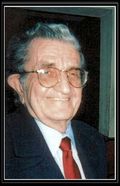
I am honored that Dr. Bihari’s widow (and my dear friend) Jackie Young, has entrusted me with a video from 2002, never before seen on the Internet.
Jackie has asked me to share this treasure with you.
This video is more than one hour of Dr. Bihari talking about his life and his work with LDN.
Rather than dividing the video into 10-minute segments for YouTube, I have opted to include it in its entirety here. In addition, I have transcribed the entire video so that you can read Dr. Bihari’s words. And, so that you can easily find the parts of the video you want to watch first, I have included a timeline. Just drag the cursor to the sections you want to watch first; then come back and watch other sections at your leisure. It’s a wonderful video, with lots of great information.
I hope you will take advantage of this opportunity to see Dr. Bihari, up close and personal, as he was in 2002.
And I also hope you’ll take the time to leave messages for Jackie, his beloved partner for so many years, in the comments section below.
CLICK HERE to see the VIDEO.
CLICK HERE to read the TRANSCRIPT.
CLICK HERE to see a LIST of conditions LDN has worked on.
00:00 to 02.26—Dr. Bihari gives his background and credentials.
Dr. Bihari: My medical training started at Harvard Medical School. I graduated in 1957. Then I trained in Internal Medicine at one of the Harvard teaching hospitals in Boston, Beth Israel, and then in Neurology at Massachusetts General in Boston. Then I went to the National Institutes of Health for two years doing brain physiology—brain research. I did another residency training in Psychiatry in New York, at Columbia Presbyterian Medical Center and then, over the following five or six years, I got very involved in working in Drug Addiction. By 1974, I was the City Addiction Commissioner. I ran all the programs that the city funded for addicts. Then in 1978, the governor and the mayor met, when the governor took over management of the city’s addiction programs, because the city was in a budget crisis. Mayor Koch saved about $8 million and I moved to the city health department as a Deputy Commissioner. I was the only deputy medical commissioner. I basically ran the city health department for about three years. Then I moved to King’s County Hospital, where I ran a cluster of addiction programs for drug addicts and alcoholics. By the early ‘80s, as the AIDS epidemic began, I got very concerned about it. I was seeing large numbers of the heroin addicts I was treating die. I had a couple of friends who died of HIV in the late ‘80s. I got very concerned about what I saw as a major epidemic—a worldwide epidemic—coming over time. That’s sort of a background, taking me up to the point where I started doing this research.
QUESTION: Can you talk about working with methadone?
Dr. Bihari: Yes, my first job with city government was running all of the city health department’s methadone programs. There were forty-one—shortly after the methadone system had been put in place. It was while I was doing that that the mayor, Abe Beame, moved the addiction services agency into the health department, and I took over the management of all the addiction programs: the drug-free and the methadone programs. And I ran both for about four years. I was one of the early proponents of methadone and, because of my job in city government, for a couple of years I was a major spokesperson for methadone—which in subsequent years, I had mixed feelings about. Then I became more broadly involved in drug addiction and alcoholism as a public health problem. Then, later, I shifted my energy to AIDS.
Q: How did your connection with Naltrexone begin?
Dr. Bihari: In 1984, the National Institute on Drug Abuse finished the development of Naltrexone as an adjunct to treating heroin addicts. Its purpose was to block the heroin high with the hope that it would become a very useful treatment for heroin addicts. It works in heroin addicts by blocking the receptors in cells, mostly in the brain in that situation. Heroin uses primarily the pain receptors. They're all called opioid receptors. Those that are involved in pain relief, and relief of fear. It’s a designer drug, really. It was designed in the laboratory to block those receptors and prevent heroin from having access to them. So addicts would take 50 mg a day in the morning and couldn't get high for hours. It would take a very large amount of heroin to overcome the high. The blockade caused by naltrexone. And when the drug came out, I was interested in trying it. I gave it to about two dozen heroin addicts who had recently stopped using heroin. None of them would stay on it. At the doses involved it caused anxiety, depression, irritability. They couldn't sleep, and even minor stresses that they could handle the day before, they couldn't handle on days that they took naltrexone in the morning. So it was out on the market, and has remained so since, but has been relatively little used.
One of the things I did know from its development, which I had followed closely because I was treating addicts, is that naltrexone, when taken in these high doses, would get the body to triple its production of endorphins. Endorphins are the hormones that heroin works by mimicking. They have a number of functions in the body. They relieve pain; they relieve fear. They're the hormones we use when we’re teenagers to cope with social situations and other anxiety-producing situations. It’s really endorphins that relieve the anxiety. They also play a major role during acute stress. For example, an animal who’s attacked in the jungle—his body responds by pouring out large amounts of endorphins, and in parallel, of corisol, which is a cortisone-related hormone. And the endorphins in that situation not only relieve the pain so that when the animal gets injured he’s not distracted. They relieve the fright. They also shift blood from the whole gastrointestinal tract where a lot of the blood flow is to the muscles and brain, which need it during a fight. And, most importantly, in this situation, they boost the immune system so that the immune cells double very quickly and the immune functions all improve with the large amount of endorphins poured out, so that if the animal gets injured, it’s much less likely to get infected, so there will be better wound healing. Because of its role in regulating immune function, I got interested in it in the mid-‘80s. In 1985, as I saw the AIDS epidemic expanding, I decided to shift my research energies from addiction to AIDS, and in particular, to look for something that might boost immune function. I knew that the immune system was regulated almost entirely by endorphins, and that also the endorphin production was markedly increased by naltrexone. My colleagues and I worked to find some way of using that ability of naltrexone to raise endorphins, but without the downside of naltrexone blocking the endorphins, the purpose being to find a way to raise endorphins to boost immune function. Along the way, we tested endorphin levels in ten people with AIDS and found they were extremely low—less than 30% of normal. So the hormones that people with AIDS need the most, to have the immune system fight the virus—those hormones are lacking. So, what we did was to do what's called a “dose ranging trial” to find the best dose of the drug to use to raise endorphins without blocking them at the same time.
What we did was we measured the endorphin rises with different doses of Naltrexone. We got the same rise with 50 mg, 10 mg, 5 mg, and 3 mg. What we were looking for was the smallest dose that could produce a full naltrexone-induced endorphin rise, if taken late at night. The reason the hour is important is that 90% of the endorphins are made in the middle of the night, between 2 and 4 in the morning. If a small dose of naltrexone is taken in the late evening, generally at bedtime, generally endorphin production is boosted as much as threefold, 300%. The naltrexone itself is gone in about 3 hours, but the endorphins remain elevated all the next day. So the naltrexone doesn't significantly block the endorphins but does cause them to rise. If someone with low endorphin levels starts taking low dose naltrexone every night, their endorphin levels will triple and stay tripled as long as they're taking the drug.
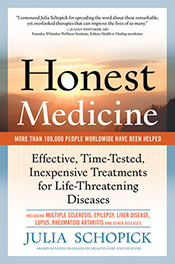
By popular demand, my book, HONEST MEDICINE: Effective, Time-Tested, Inexpensive Treatments for Life-Threatening Diseases, is now available for the KINDLE. It took a long time—and about 100 hours of work by my dear friend Mark—but it is finally ready. And it looks great!! (Why it took so long to prepare is another story—for another posting. But please trust me, it did!)
So, please tell all your ebook-savvy friends, sons, daughters, nieces, nephews and other relatives: You can download HONEST MEDICINE for Kindle for $8.99.
MOBI files (the kind of file the KINDLE uses) can be viewed on Kindles (both handheld and computer-based), as well as on smartphones and ipads.
Thanks so much for telling everyone you know who owns a KINDLE or other device about HONEST MEDICINE's arrival as an ebook. I can’t wait to hear how you enjoy reading it!
Go here to download HONEST MEDICINE for Kindle.
Julia Schopick Interviewed by Dr. Ronald Hoffman about HONEST MEDICINE: The HOFFMAN EFFECT
On February 8th, I was interviewed by the wonderful integrative physician and author, Ronald Hoffman, MD, on his New York radio show, “Health Talk.”
Frankly, I knew that Dr. Hoffman would do a great interview:
I had read his books and loved them. And as a matter of fact, I myself had interviewed Dr. Hoffman for HonestMedicine.com, after his book, How to Talk with Your Doctor came out. I was introduced to him by his co-author, Sidney Stevens, a friend of mine, who thought that Dr. Hoffman would provide me with a great interview. He did. (Click here to listen to that interview.)
After that interview, Dr. Hoffman and I became friends, and I asked him to write a testimonial for my book, which he graciously did.
When HONEST MEDICINE was published, I knew that I wanted to be interviewed by Dr. Hoffman for his WOR-AM radio show in New York. I knew he’d do a great job, and that his large listenership would provide me with a unique opportunity to spread the word about the amazing treatments I feature in my book.
The interview aired on February 8th, 2011. I urge you to listen to it.

But nothing prepared me for what I now refer to as “The Hoffman Effect”:
Before the show was even over in New York, I began getting emails from Dr. Hoffman's listeners, telling me how much they were enjoying the interview, and asking for information about the treatments featured in mybook. I was happy to oblige.
Then the next day, it happened:
HONEST MEDICINE was an AMAZON.COM BEST SELLER!
I call it “The Hoffman Effect.”
Here is an Amazon.com screen shot two days after Dr. Hoffman’s interview. As you can see, HONEST MEDICINE was in the top 4137 books, and #1 in Immune System books, and #2 in the Holistic category!!
I can’t thank Dr. Hoffman enough for giving me this opportunity to get the word out about HONEST MEDICINE, so that thousands of people will be able to learn about it. As most of you who are reading this know, this book is a mission and a passion for me.
NOTE: If you know of a radio host who is really good--like Dr. Hoffman--and who (like Dr. Hoffman) is knowledgeable about health topics, please write to me. I'd love to be a guest on many more shows like Dr. Hoffman's!!
HONEST MEDICINE: My Dream for the Future
@2025 HonestMedicine and Julie Schopick.
All Rights Reserved. Terms and Conditions. Privacy Policy